

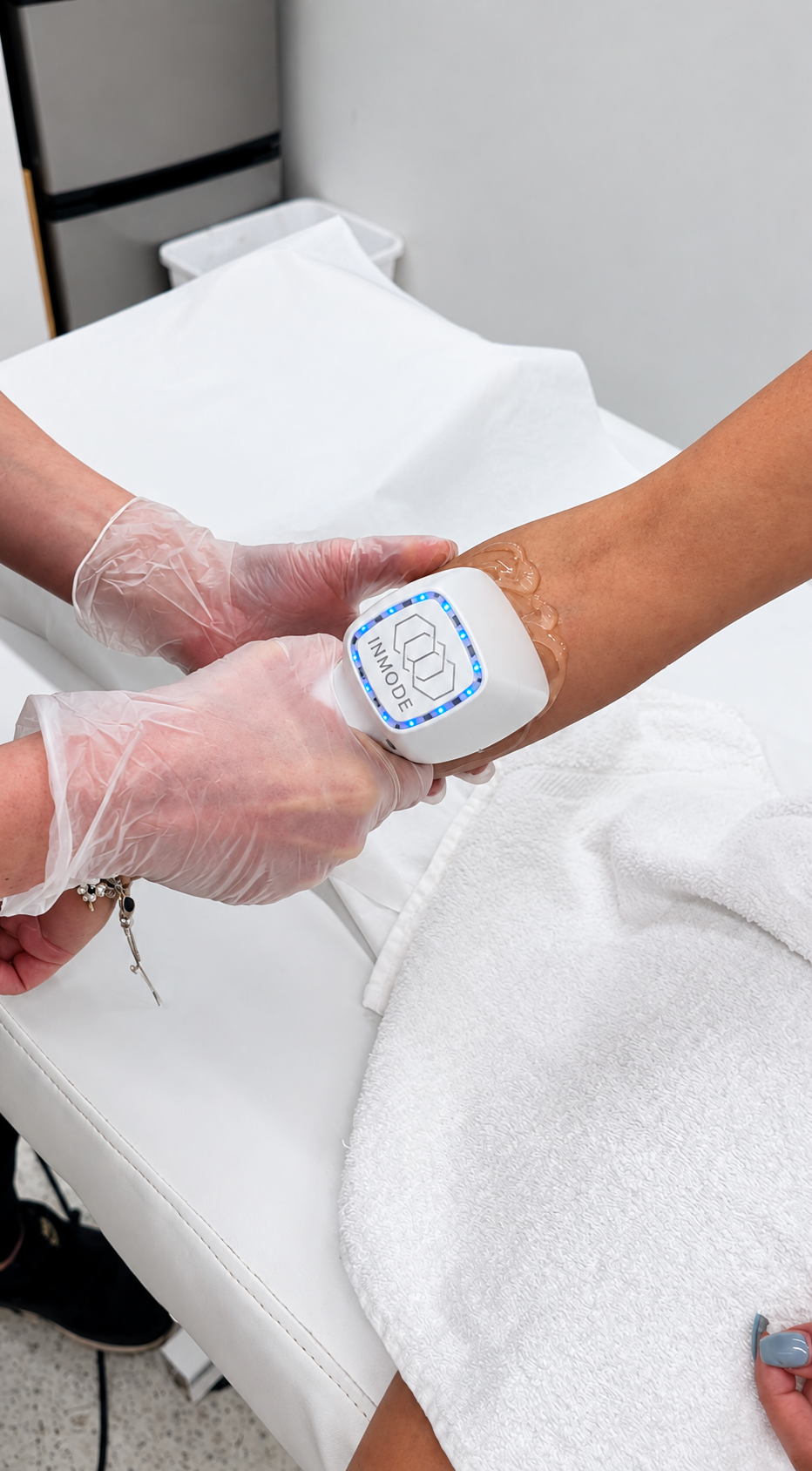
Laser hair removal causes mild discomfort that most people compare to a rubber band snapping against the skin. Each pulse lasts less than a second, so the sting ends almost as soon as you feel it. How much laser hair removal hurts depends on the body area, your hair and skin type, and the cooling technology the clinic uses. Most clients find it less painful than waxing, and the sensation fades with each session as the hair thins. The Canadian Medical Association Journal has described laser hair removal as usually painless and effective.
At Laserbody MD, our certified medical laser specialists perform laser hair removal under medical oversight across our seven award-winning Ontario clinics, and our medical team reviewed this guide for accuracy.
What Laser Hair Removal Feels Like During Each Pulse
The laser sends a burst of light into the skin, and the pigment in each hair turns that light into heat. You feel that heat as a quick snap or a hot pinprick at the spot the laser touches. Some clients describe it as a light electric sting, and others compare it to getting their ears pierced.
The provider moves the handpiece across the area in a steady pattern, so you feel a series of quick snaps instead of one long burn. Small areas take a few minutes, which keeps the total discomfort short. Larger areas like the legs or back take longer, though each individual pulse feels the same.
What Your Skin Feels Like After a Laser Hair Removal Session
Most clients leave with mild redness and small raised bumps around the treated follicles. The area can feel warm and tender, similar to a light sunburn. These effects usually fade within a few hours, and some clients see redness for up to a day.
A cold compress calms the skin if the warmth lingers. Avoid hot showers, saunas, and workouts for the first 24 hours, since heat and sweat irritate freshly treated skin. Call your clinic if you notice blisters, crusting, or pain that gets worse after the first day.
When Pain After Laser Hair Removal Is Not Normal
Mild redness, small bumps, and warmth for a few hours to a day are normal after laser hair removal. Pain that gets stronger instead of fading is not. Call your clinic if you notice any of these signs:
- Blisters or crusting. Small fluid-filled bumps or crusts on the treated skin can point to a burn.
- Pain that gets worse after the first day. Normal tenderness fades within hours. Pain that builds over time needs a check.
- Lighter or darker patches. Changes in skin colour after treatment should be looked at early.
- Signs of infection. Spreading redness, swelling, warmth, or pus around the treated follicles.
Health Canada's guide to cosmetic laser treatments lists blisters, burns, and infection as less common risks of laser treatment, and notes that the wrong equipment or technique can cause lasting skin damage. Choosing trained medical providers lowers that risk.
Laser Hair Removal Pain vs Waxing, Threading, Shaving, and Electrolysis
Laser hair removal stings for a split second with each pulse, then the feeling fades. Waxing and threading pull hair out by the root, and you repeat that pain every few weeks for as long as you use them. Electrolysis treats one hair at a time, so the discomfort repeats at every follicle. The table below compares how each method feels.
Which Body Areas Hurt the Most During Laser Hair Removal
Areas with thin skin, dense nerve endings, or coarse hair hurt more than areas with thicker skin and finer hair. The table below ranks the most common treatment areas by how they usually feel.
- Upper lip. Upper lip laser hair removal takes only 10 to 15 minutes, so the stronger sting lasts a short time.
- Underarms. The coarse hair absorbs a lot of heat, though many clients find underarm laser hair removal easier than they expected. One of our underarm clients told us she "felt no pain at all" during her first session.
- Brazilian. Brazilian laser hair removal tends to hurt most in the first 2 or 3 sessions. The sensation drops as the hair becomes finer and sparser.
- Back. Back laser hair removal covers a large surface, so the session runs 30 to 45 minutes even though each pulse feels moderate.
- Legs. Laser hair removal for the legs is one of the easiest areas to tolerate, with the shins feeling milder than the inner thighs.
How Hair and Skin Type Change the Sensation
Coarse, dark hair holds more pigment, so it absorbs more heat and creates a stronger snap. That same pigment is what makes dark hair respond best to treatment. Fine or light hair absorbs less heat and causes less sensation, though it also responds less to the laser.
Skin tone also changes how the laser feels. Darker skin contains more melanin, so the wrong laser or settings can overheat the skin and cause burning. Clients who need laser hair removal for dark skin should choose a clinic that uses a diode or Nd:YAG laser and adjusts the settings to their skin.
Does Laser Hair Removal Hurt Less With Each Session?
The first session usually hurts the most, because every follicle in the area still holds a full, thick hair. By the third or fourth session, many of those hairs are gone or have grown back finer. Most clients notice each visit feels milder than the last.
The change is clearest on areas with thick, dark hair, like the underarms, Brazilian area, and back. Finer areas like the arms start milder, so the drop is smaller. If one session feels stronger than the last, tell your provider, since hormones, sun exposure, or a missed shave can all make the skin more sensitive.
Does Laser Hair Removal Hurt More for Men?
Laser hair removal can feel stronger for men in the first few sessions, because the hair on the back, chest, shoulders, and beard line is usually coarse and dense. More pigment in each hair means more heat and a stronger snap. The neck and beard line also sit close to sensitive nerves of the face.
The good news is that coarse hair also responds well to the laser, so the sensation drops quickly as the hair thins. Large areas like the back take longer, but our InMode Diolaze XL laser covers them fast with its large treatment area. Men's laser hair removal plans at Laserbody MD start with a free consultation, where your provider checks your hair and skin and explains what each area will feel like.
How Laser Technology and Cooling Reduce Pain
Modern lasers cool the skin before, during, or after each pulse. The cooling protects the outer layer of skin while the heat reaches the follicle below. Health Canada's laser hair removal safety guidelines list ice, gels, cold glass, and cold airflow as common ways to protect the skin during treatment.
- Contact cooling. A chilled tip on the handpiece touches the skin with every pulse and numbs the surface as the laser fires.
- Cold air cooling. A separate device blows cold air across the area during treatment.
- Cooling gel. The provider spreads a cold gel over the skin before the session, which helps the handpiece glide and soothes the area.
The laser settings matter as much as the cooling. A trained provider sets the energy level and pulse length for your hair and skin, then adjusts them if a spot feels too strong. Laserbody MD uses the InMode Diolaze XL diode laser for laser hair removal in Toronto and across Ontario. It is Health Canada approved and uses contact cooling: a chilled tip lowers the skin temperature with every pulse. Its large treatment area also covers big areas faster, so sessions are shorter.
Using Numbing Cream for Laser Hair Removal
Your provider can apply a topical numbing cream 30 to 45 minutes before treatment. Numbing cream helps most on sensitive areas like the upper lip, underarms, and Brazilian area. Many clients skip it on the legs and arms, where the sensation stays mild.
Do not apply your own numbing cream at home unless your provider tells you to. Use numbing cream only under your provider's direction. Health Canada warned health professionals about serious side effects in adults who applied topical anesthetics to large body areas before laser hair removal. The risk rises with stronger products, larger areas, and skin covered in plastic wrap after application.
Try It First: What the Laser Hair Removal Patch Test Tells You
A patch test is the easiest way to find out how laser hair removal feels on your own skin. Your provider treats a few small spots in the area you want to treat, then checks how your skin reacts. Health Canada recommends a patch test before full treatment.
The patch test also lets your provider fine-tune the energy level and cooling for your skin and hair. At Laserbody MD, your free 30-minute consultation comes first. Once you choose a package, your patch test is booked, and your first full session can follow in the same week.
How to Make Laser Hair Removal Hurt Less With Low Pain Tolerance or Sensitive Skin
Preparation changes how your skin reacts to the laser. These steps lower the sensation for clients with low pain tolerance or sensitive skin.
- Shave the day before. Shaving leaves the root in place for the laser to reach, while long surface hair burns and makes the snap stronger.
- Stop waxing and plucking. Avoid both for at least 4 weeks before treatment, since the laser needs the root inside the follicle.
- Stay out of the sun. Tanned or sunburned skin reacts more strongly to heat, so avoid sun exposure and tanning products before each session.
- Pause harsh skincare. Stop retinoids, acids, and exfoliants a few days before treatment, because they thin and sensitize the skin.
- Time your appointment. Some clients find their skin more sensitive in the days before and during their period, so they book outside that window.
- Tell your provider. Speak up if a spot feels too strong, since the provider can lower the energy, add cooling, or pause between passes.
Frequently Asked Questions About Laser Hair Removal Pain
Does the first session of laser hair removal hurt the most?
Yes, the first laser hair removal session usually hurts the most. Every follicle in the area still holds a full, thick hair that absorbs a lot of heat. By the third or fourth session, many of those hairs are gone or have grown back finer, so each laser hair removal session feels milder than the last.
Does Brazilian laser hair removal hurt?
Brazilian laser hair removal is one of the more sensitive areas, because the skin is thin, the nerve endings are dense, and the hair is coarse. Most clients feel the strongest snap in the first 2 or 3 sessions. Contact cooling and, if your provider recommends it, numbing cream make Brazilian laser hair removal sessions much easier to tolerate.
Can I take a painkiller before my laser hair removal session?
Ask your provider before you take any pain medication before a laser hair removal session. Your provider knows your health history and can tell you what is safe for you. For most areas, the laser cooling tip is enough to keep laser hair removal comfortable.
Does laser hair removal hurt more on dark skin?
Laser hair removal does not have to hurt more on dark skin when the clinic uses the right laser and settings. Darker skin holds more melanin, so the wrong laser can overheat the skin. Laser hair removal for dark skin at Laserbody MD uses a diode laser with contact cooling, with settings adjusted to your skin at every visit.
Can I use my own numbing cream before laser hair removal?
Do not use your own numbing cream before laser hair removal unless your provider tells you to. Health Canada has warned that applying topical anesthetics to large areas of the body before laser hair removal can cause serious side effects. At Laserbody MD, your provider decides if you need numbing cream and how to use it safely.
How long does soreness last after laser hair removal?
Soreness after laser hair removal usually lasts a few hours. Redness, warmth, and small bumps around the follicles can last up to a day. If the pain gets worse instead of better after the first day, call your clinic.
Book a Laser Hair Removal Consultation at Laserbody MD
A free 30-minute consultation lets you talk through your pain tolerance, sensitive areas, and skin type before your first session. Our medical team explains what each area will feel like and how we keep you comfortable during treatment.
Call 647-800-6741 or book a free consultation for laser hair removal at our clinics in Toronto, Brampton, Mississauga, Hamilton, Oakville, Pickering, and Richmond Hill.