

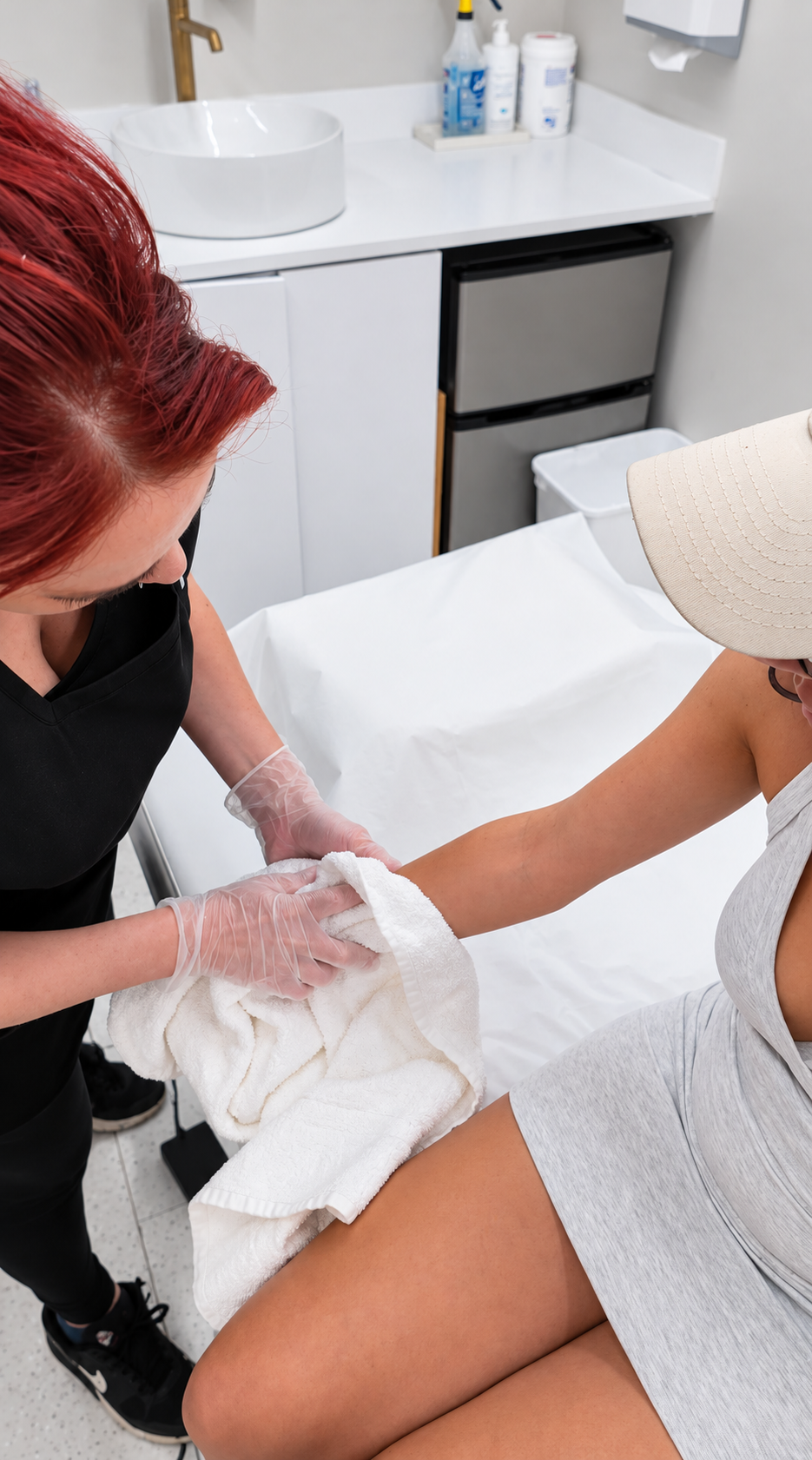
Laser hair removal is not 100 percent permanent, but it permanently reduces how much hair grows back. It destroys many hair follicles for good, and the follicles it only damages grow back finer, lighter, and sparser.
Most clients finish a full course of 6 to 8 sessions with far less hair, then book an occasional touch-up to keep the area smooth. How long your results last depends on your hair colour, your hormones, the body area, and the laser your clinic uses.
At Laserbody MD, our certified medical laser specialists perform laser hair removal under medical oversight across our seven Ontario clinics, and our medical team reviewed this guide for accuracy.
Is Laser Hair Removal Permanent Hair Removal or Permanent Hair Reduction?
Laser hair removal gives permanent hair reduction, not permanent hair removal. Fewer hairs grow back over the long term, but some regrowth is normal. In Canada, Health Canada licenses hair removal lasers and controls their sale. Its laser hair removal safety guidelines explain that hair grows in several phases, so most people need repeated treatments to reach permanent hair reduction.
Health Canada's guide to cosmetic laser treatments notes that lasers can give some permanent hair reduction, but results are not guaranteed for every person or every body area. Clinics that promise 100 percent permanent removal are overstating what the treatment does.
How Laser Hair Removal Destroys or Damages Hair Follicles
The laser sends light into the skin, and the melanin in each hair absorbs it. That light turns into heat, which travels down the hair shaft to the follicle at the root. The result depends on how much heat reaches each follicle.
- Destroyed follicles. A follicle that absorbs enough heat stops producing hair for good.
- Damaged follicles. A follicle that absorbs less heat recovers over time and grows a thinner, lighter hair.
Dark hair holds more melanin, so it absorbs more heat and responds best. Blonde, grey, white, and red hair hold less of the right pigment, so lasers have little effect on them. Skin tone matters too, since darker skin also contains melanin. Clients who want laser hair removal for dark skin need a laser and settings that heat the follicle without burning the surrounding skin.
How Much Hair Laser Hair Removal Removes After a Full Course
Clinics often quote an 80 to 90 percent reduction after 6 to 8 sessions. Controlled trials report a wider spread. A 2022 University of Aberdeen systematic review in the Journal of Cosmetic and Laser Therapy compared five randomized trials and found long-term hair reduction of 30 to 84 percent. The trials measured results 6 to 18 months after the last session. Clinic figures tend to run higher than trial figures, since trials count regrowing hairs months after the last session and some tested older devices.
IPL (intense pulsed light) is a light-based device, not a laser, but trials often test it alongside lasers. The legs and underarms gave the best results in every device group, and the face gave the lowest. Body areas with longer hair growth cycles responded better over the long term. The same review found that 6 sessions produced better long-term results than 3.
The number of sessions you need also changes by body area. The table below shows the session counts our medical team sees most often at our clinics for laser hair removal in Toronto and across Ontario.
- Chin and upper lip. Facial hair often responds to hormones, which explains the lower trial results on the face. Laser hair removal for the chin may need more touch-ups than other areas to stay smooth.
- Full body. Full body laser hair removal needs the most sessions because it covers areas with different hair densities and growth cycles.
What Hair Looks Like When It Grows Back After Laser Hair Removal
Treated hair does not fall out on the day of your session. It sheds over the following 1 to 3 weeks as the damaged follicles push it out. Many clients mistake this shedding for new growth.
Hair that returns after a full course grows from follicles the laser damaged but did not destroy. These hairs come back finer, lighter in colour, and further apart than before. Many clients find the regrowth so faint that they skip shaving for months at a time.
Why Hair Grows Back After Laser Hair Removal
Regrowth after a full course has three main causes. Your consultation should cover each one, since they decide how many sessions and touch-ups you will need.
The Hair Growth Cycle
Each follicle moves through a growth phase (anagen), a transition phase (catagen), and a resting phase (telogen). The laser only destroys follicles in the active growth phase, when the hair is still attached to the root. At any one time, only part of your hair is in that phase. Sessions spaced 4 to 6 weeks apart catch each follicle as it moves into active growth.
Hormonal Changes
Hormones can wake dormant follicles or start new hair growth years after your last session. Pregnancy, menopause, thyroid conditions, and aging all change hormone levels. Clients with polycystic ovary syndrome often see new facial and body hair over time, since the laser treats existing follicles and leaves the hormonal cause in place. PCOS laser hair removal usually takes 6 to 10 sessions plus ongoing maintenance.
Laser Type and Provider Skill
Some lasers reach the follicle with more precision than others. The trial data above shows IPL devices produced the weakest long-term results of the four device types. Settings matter as much as the device, because heat that is too low only damages follicles. A trained medical provider adjusts the energy level, pulse length, and cooling to your skin and hair at every visit.
Laserbody MD uses the InMode Diolaze XL diode laser, which is Health Canada approved and has a built-in cooling system. Its large treatment area makes sessions faster on big areas like the legs and back. Diode lasers work on a wide range of skin tones, including darker skin.
How Often You Need Laser Hair Removal Maintenance Sessions
Most clients book 1 or 2 touch-up sessions per year after their main course. A touch-up treats the scattered hairs that return from damaged follicles or hormonal changes. Areas with strong hormonal links, like the chin and jawline, tend to need touch-ups more often than the legs or underarms. Laserbody MD members are covered by our touch-up guarantee if any hair returns after their treatment series.
Book a touch-up when you notice regrowth, instead of on a fixed schedule. Shaving the odd stray hair between sessions is fine. Avoid waxing or plucking, since the laser needs the hair root in place to reach the follicle.
How to Make Your Laser Hair Removal Results Last
Most of what decides your long-term results happens during your treatment course. These habits help the laser reach as many follicles as possible and keep regrowth low.
- Stick to your session schedule. Sessions every 4 to 6 weeks catch each follicle in its growth phase. Long gaps let some follicles slip through.
- Finish the full course. Stopping after 2 or 3 sessions leaves many follicles damaged but not destroyed, so more hair comes back.
- Shave, but don’t wax or pluck. Shave the area before each session and between visits. Waxing, plucking, and threading pull out the root the laser needs to reach.
- Protect your skin from the sun. Avoid tanning and use sunscreen on treated areas in the weeks before and after each session. Tanned skin raises the risk of side effects and can mean lower settings.
- Tell your provider about hormone changes. Pregnancy, PCOS, menopause, or a new medication can start new hair growth. Your provider can adjust your plan.
- Book touch-ups early. A quick touch-up when you first notice regrowth is easier than waiting until the area fills in again.
Laser Hair Removal vs Electrolysis for Permanent Results
Electrolysis is the method most often described as permanent hair removal. A practitioner inserts a fine probe into each follicle and destroys it with an electric current, one hair at a time. Electrolysis works on every hair colour, including blonde, grey, and red.
Many clients combine the two. Laser hair removal clears most of the hair across a large area, and electrolysis treats the few light or grey hairs the laser cannot reach.
Start Your Laser Hair Removal Plan at Laserbody MD
A free 30-minute consultation tells you how much hair reduction to expect on your skin, hair colour, and treatment areas. Our medical team checks your skin and hair, explains how many sessions you will likely need, and builds a plan that includes maintenance. Once you choose a package, your patch test is booked, and your first session can follow in the same week.
Call 647-800-6741 or book a free consultation for laser hair removal at our clinics in Toronto, Brampton, Mississauga, Hamilton, Oakville, Pickering, and Richmond Hill.