

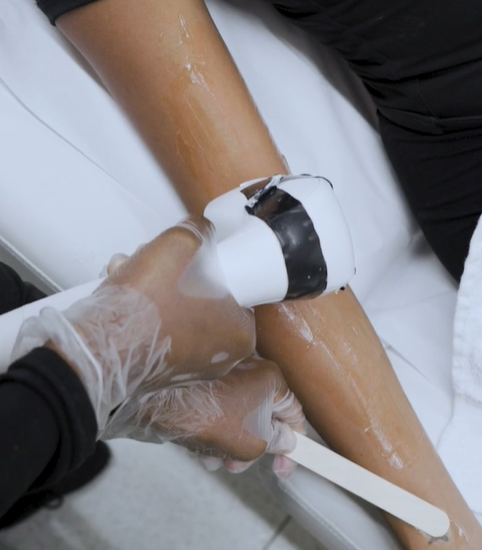
Laser hair removal works by sending a focused beam of light into the skin, where the dark pigment in each hair absorbs it and turns it into heat. That heat travels down the hair to the follicle and damages the cells that grow new hair, so the follicle produces less hair or stops growing it. Knowing how laser hair removal works explains why you need a series of sessions and why your hair colour affects your results.
At Laserbody MD, our certified medical laser specialists perform laser hair removal across our eight Ontario clinics, under medical oversight.
This guide covers the science behind each laser pulse, what happens during a session, the number of sessions you can expect, and the skin and hair types that respond best. It also walks you through preparation and the side effects to expect after treatment. Our medical team reviewed this guide for accuracy.
How Does Laser Hair Removal Work on the Hair Follicle?
Laser hair removal relies on a process that doctors call selective photothermolysis. The laser sends light at a set wavelength that the pigment in hair absorbs far more than the skin around it, so the heat stays focused on the hair. Our medical team uses this process for every client who books laser hair removal in Toronto or at our other Ontario clinics.
The Laser Targets the Melanin in Each Hair
Melanin is the pigment that gives hair its dark colour, and it sits in both the hair shaft and the follicle. Hair removal lasers send light between 600 and 1,200 nanometres, because melanin absorbs light in that range well. The darker and coarser the hair, the more light it absorbs.
The Light Turns Into Heat Inside the Hair Shaft
Melanin converts the light it absorbs into heat within a fraction of a second. Each pulse is short enough for heat to build inside the hair while the surface of the skin stays cooler. The Health Canada approved InMode Diolaze XL diode laser at our clinics adds a built-in cooling system that protects the outer layer of skin during each pulse.
Heat Damages the Follicle So It Grows Less Hair
The heat travels from the hair shaft down into the root and the germ cells at the base of the follicle. These cells produce new hair, so damaging them leaves the follicle unable to grow hair or able to grow only finer, lighter hair. Follicles that take in enough heat stop producing hair for the long term.
Treated Hairs Shed 1 to 3 Weeks After Each Session
For 1 to 3 weeks after a session, the treated hairs push out of the follicle and fall away. Many people mistake this for regrowth because the hairs still show above the skin before they shed. You can shave during this time, but avoid waxing or plucking so the hairs can shed on their own.
Laser Types and the Wavelengths They Use
Clinics use several types of laser, and each one sends light at its own wavelength. Longer wavelengths reach deeper into the skin and put less energy into the pigment at the skin's surface. That is why the Nd:YAG laser suits darker skin, though it tends to give weaker results on lighter or finer hair.
Intense pulsed light (IPL) devices send a broad band of light from 590 to 1,200 nanometres, and they are not true lasers. Our clinics use the InMode Diolaze XL diode laser because its wavelength and cooling system allow safe treatment across a wide range of skin tones.
What Happens During a Laser Hair Removal Session
Your journey starts with a free 30-minute consultation, where our medical team checks your skin and hair and builds your plan. Once you choose a package, we book a patch test, and your first session can be as soon as the same week. Here is what happens at each session.
- Skin and hair check. Your specialist checks that the area is freshly shaved, not tanned, and free of lotion, and confirms the laser settings for your skin.
- Cleaning the area. The skin is cleaned so nothing on the surface absorbs the laser light.
- Eye protection. You and your specialist wear protective glasses for the whole session.
- Laser passes with cooling. Your specialist moves the laser across the area in passes. The cooling tip keeps the skin comfortable, and each pulse feels like a light snap against the skin.
- Aftercare. Your specialist soothes the skin and explains how to care for the area over the next few days.
A small area such as the upper lip takes about 10 to 15 minutes, while a full body session takes 2 to 3 hours.
Why Laser Hair Removal Takes 6 to 8 Sessions
Hair grows in cycles, and the laser can only treat the hairs that are growing at the time of your session. Most people need 6 to 8 sessions, spaced 4 to 6 weeks apart, to treat each follicle while it is in the right phase.
The Laser Works on Hairs in the Active Growth Phase
Each hair moves through three phases called anagen (active growth), catagen (transition), and telogen (rest). During anagen, the hair stays attached to its root and holds the most pigment, so the follicle takes in the most heat. Health Canada's laser hair removal safety guidelines explain that because hair grows in these phases, most people need repeated treatments.
Spacing Sessions 4 to 6 Weeks Apart Catches Each New Growth Wave
Only a portion of your hair is in anagen at any one time, so each session treats one group of follicles. Spacing sessions 4 to 6 weeks apart lets the next group enter the growth phase before your next visit. Most clients at our clinics see about 10 to 25 percent less hair after the first session, and the full series brings longer-lasting results.
Larger areas take longer per session, and some areas need more visits before you see a clear drop in hair. The table below shows the session times and session counts our medical team uses for the most common areas.
Your own plan may differ from these ranges. Our medical team sets your session count at the consultation after checking your hair density, hair colour, and skin tone.
Which Skin and Hair Types Respond Best to Laser Hair Removal
Laser hair removal works best when there is clear contrast between dark, coarse hair and lighter skin. The laser finds the pigment in the hair easily, and the skin around it absorbs little of the light. Hair colour has the largest effect on how well treatment works.
Darker skin holds more melanin, which raises the risk of burns or pigment changes when a clinic uses the wrong laser or settings. The Diolaze XL diode laser reaches the follicle while putting less energy into the skin's surface pigment, and its cooling system protects the skin during each pulse. Before every plan for laser hair removal for dark skin, our medical team runs a consultation and a patch test to confirm the right settings.
How Laser Hair Removal Works Differently From Electrolysis
Laser hair removal and electrolysis both treat the follicle, but they work in different ways. Laser uses light to heat many follicles at once, while electrolysis uses a fine probe and a small electric current to destroy one follicle at a time.
Is Laser Hair Removal Permanent?
Laser hair removal gives permanent hair reduction, which means fewer hairs grow back over the long term, and any hair that returns tends to be finer and lighter. Health Canada's guide to cosmetic laser treatments notes that results are not the same for every person or every body area. A 2022 University of Aberdeen review of five randomized trials found long-term hair reduction of 30 to 84 percent, measured 6 to 18 months after the last session, and results varied by the type of laser used.
Hormonal changes, such as pregnancy, menopause, or PCOS, can activate follicles that were resting during treatment, so some clients need occasional maintenance sessions. Clients with hormonal hair growth often follow a PCOS laser hair removal plan. For a full answer, read our guide to whether laser hair removal is permanent.
How to Prepare for Your First Laser Hair Removal Session
Good preparation lowers the risk of side effects and helps the laser reach the follicle. Follow these steps in the weeks before your first session.
- 4 weeks before. Stop waxing, plucking, threading, and epilating, because the laser needs the hair root in place inside the follicle. Shaving is fine during this time.
- 2 weeks before. Avoid sun exposure, tanning beds, and self-tanner on the treatment area. Tanned skin holds more pigment and raises the risk of burns and dark spots.
- 3 to 5 days before. Pause retinoids, acids, and scrubs on the treatment area so your skin is calm on the day.
- 24 hours before. Shave the area so the heat goes into the hair below the skin. Long hair on the surface absorbs heat and can irritate the skin.
- On the day. Arrive with clean skin and no lotion, deodorant, or makeup on the area.
Ask our medical team before you use any numbing cream on the treatment area. Health Canada warned health professionals in 2009 about serious reactions in adults who applied numbing creams to large areas before laser hair removal. The risk rose with stronger creams, larger treatment areas, and plastic wrap over the skin.
Side Effects to Expect After Laser Hair Removal
Redness and mild swelling around each follicle are the most common side effects, and they usually settle within a few hours. Less common effects include crusting, blistering, and lighter or darker patches of skin, which are more likely on darker or tanned skin. Most of these changes fade on their own within days or weeks.
- First 24 hours. Apply a cold compress or aloe vera if you notice redness or swelling.
- 24 to 48 hours. Skip hot showers, saunas, and intense workouts, since extra heat can irritate treated skin.
- 3 to 5 days. Avoid retinol, acids, and scrubs, and keep the area clean and moisturized.
- 2 weeks. Stay out of direct sun and wear SPF 30 or higher every day on the treated area.
Contact your clinic if you notice blistering, crusting, or redness that lasts longer than 2 days.
How Laser Hair Removal Works FAQs
Does laser hair removal work on blonde or grey hair?
Laser hair removal does not work well on blonde hair and does not work on grey or white hair. The laser needs dark pigment in the hair to absorb the light and turn it into heat. Blonde and red hair hold too little of this pigment, and grey and white hair hold none, so electrolysis is usually the better option for these hairs.
Why does hair still appear after a laser hair removal session?
Hair still appears after a laser hair removal session for two reasons. First, treated hairs take 1 to 3 weeks to push out of the follicle and shed, so they can look like regrowth. Second, hairs that were resting during your session were not treated yet, and they will grow in before your next session, which is why you need a full series.
Does laser hair removal work on all skin tones?
Yes, laser hair removal works on all skin tones when the clinic uses the right laser and settings. Diode and Nd:YAG lasers are designed to reach the follicle while putting less energy into the skin's surface pigment. At Laserbody MD, we use the InMode Diolaze XL diode laser with built-in cooling and run a patch test before your first full session.
Does laser hair removal damage the skin?
No, laser hair removal does not damage healthy skin when it is done with the right settings. The laser light targets the pigment in the hair, and the cooling system protects the surface of the skin. Most side effects, such as redness and mild swelling, settle within a few hours.
How deep does the laser go into the skin during laser hair removal?
The laser goes only a few millimetres into the skin during laser hair removal, which is the depth of the hair follicles. The light does not reach muscles or internal organs, and it does not use the kind of radiation found in X-rays.
Can I shave between laser hair removal sessions?
Yes, you can shave between laser hair removal sessions, and shaving is the only hair removal method you should use during your series. Avoid waxing, plucking, threading, and epilating, because these methods pull out the hair root that the laser needs to target.
Book a Laser Hair Removal Consultation at Laserbody MD
At a free consultation, our medical team checks your skin, hair colour, and treatment areas and builds a session plan around your hair growth cycle. You leave knowing how many sessions to expect and whether laser treatment suits your hair type.
Call 647-800-6741 or book a free consultation for laser hair removal at our clinics in Toronto, Scarborough, Brampton, Mississauga, Hamilton, Oakville, Pickering, and Richmond Hill.